torook - stock.adobe.com - illustrative purposes only - pictured above is a spider

Human content, AI powered search.

Sign up for our lifestyle newsletter: relationships, romance and real stories, straight to your inbox.
In 1921, 23-year-old Ada Blackjack set sail for Wrangel Island, a remote island north of Siberia, with four men and a female cat named Vic. She was a seamstress and would be sewing survival gear there for one year.
She was promised that she would be cared for and would not have to participate in the daily efforts of surviving in the Arctic.
But when a rescue ship arrived almost two years later, Ada and Vic were the only members of the party still alive. Ada had taught herself how to hunt and trap animals to feed herself.
Ada Blackjack was born Ada Deletuk in 1898 in Spruce Creek, Alaska, a remote settlement about 40 miles east of the gold rush town, Nome.
She was Inupiat but was not raised to hunt or survive in the wilderness. Instead, she was brought up by Methodist missionaries who taught her to sew, cook, and read and write English.
When she was 16 years old, she married Jack Blackjack, a local dog musher. They had three children, but only their son Bennett survived past infancy.
Jack was abusive and eventually abandoned Ada and five-year-old Bennett on the Seward Peninsula in 1921. She walked 40 miles back to Nome with her son, who suffered from tuberculosis.
Ada did not have any money or resources to care for her son, so she was forced to place him in a local orphanage. During this time, the famed explorer Vilhjalmur Stefansson came to Nome, seeking Alaska Native families who spoke English to join an expedition.
He offered a salary of $50 a month, and Ada jumped at the opportunity.
 Barry - stock.adobe.com - illustrative purposes only
Sign up for Chip Chick's newsletter and get stories like this delivered to your inbox.
The mission was poorly planned. Vilhjalmur Stefansson picked four young, inexperienced men to go to Wrangel Island with only six months of supplies. He reassured them that the Arctic would provide plenty of game to replenish their stores until a ship picked them up the next year.
His goal was to claim Wrangel Island for the British Empire, even though Britain wasn't even interested in the territory. He also did not plan to join the expedition himself.
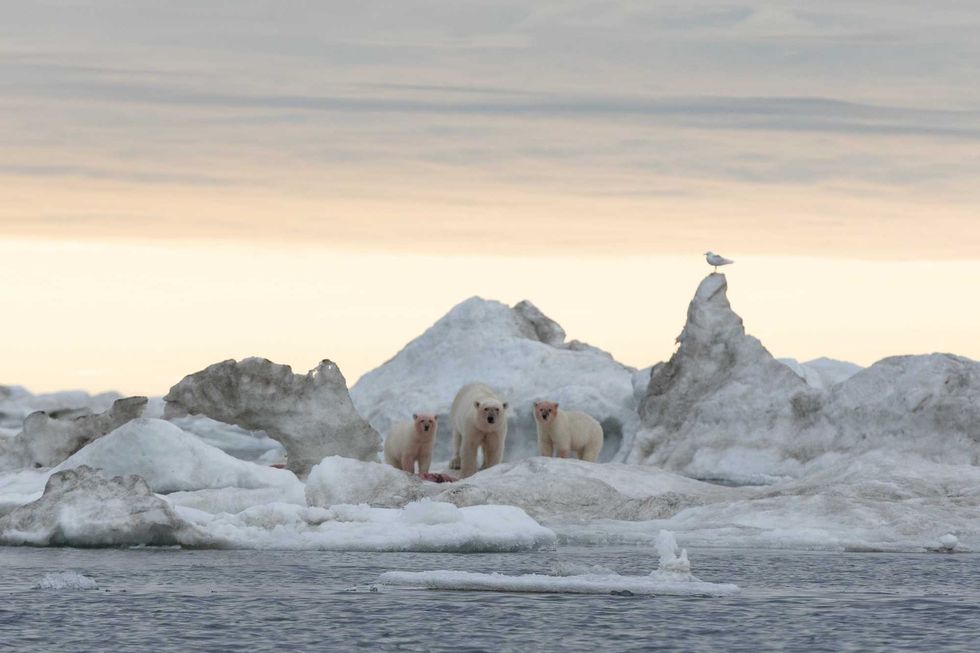
Ada was extremely nervous about the mission because she had an intense fear of polar bears and would be stranded on an island with a bunch of strange men. The other Inuit families had backed out.
But Ada was determined to earn enough money to get her son back, so she boarded the ship on September 9, 1921. The first year on Wrangel Island lived up to their expectations, but as winter descended, things were looking bleak.
Their supplies had dwindled, and the ship that was supposed to pick them up had turned back because of all the ice.
In January 1923, the party was starving. Three of the men decided to go out and search for help, leaving Ada to care for the fourth man, who was deathly ill with scurvy. The three men were never seen again.
Ada took care of the fourth for six months. She had to take on all the duties, including hunting, trapping, gathering wood, defending the camp from polar bears, and trying to nurse her only human companion back to health.
He finally passed away on June 23, 1923. She was alone for three months. In that time, she reinforced the walls of her tent with driftwood, built an observation deck above her shelter to watch for polar bears, made a stove out of empty kerosene cans, fashioned a sleeping platform, and even crafted a skin boat from driftwood for hunting seals.
She also sewed warm clothing and journaled about her life in the Arctic. She did all this while suffering symptoms of scurvy. The thought of her son kept her going.
On August 20, 1923, a ship arrived to rescue her. Upon her return to Nome, she received much unwanted attention from the press, who called her a hero.
Her payment was less than she had been promised, but she accepted it and used the money to seek treatment for Bennett's tuberculosis at a hospital in Seattle.
On September 14, 1924, she gave birth to a second son, Billy. She soon contracted tuberculosis and was forced to place her sons in an orphanage from 1927 to 1937 while she recovered. She lived in Seattle and Spokane before moving back to Alaska.
Vilhjalmur Stefansson profited from the story of the expedition, while Ada saw none of the money. Even so, her legacy lives on. Her strength and determination are an inspiration to us all.
Bennett Blackjack passed away from a stroke in 1972 at age 58. Ten years later, Ada died in a nursing home in Palmer, Alaska, at age 85 on May 29, 1983. She is buried at the Anchorage Memorial Park Cemetery. Her other son, Billy, passed away in 2003.