VAKSMANV - stock.adobe.com - illustrative purposes only, not the actual person - pictured above is a woman in front of a waterfall

Human content, AI powered search.

Sign up for our true crime newsletter and get the cases, confessions and mysteries everyone is talking about.
On January 4, 2001, 20-year-old Andrew Wieman was found dead in his locked dorm room at his fraternity residence at the University of California, Davis. He had 29 knife wounds on his body.
Authorities determined that they were self-inflicted, and his death was ruled a suicide. More than 25 years later, Andrew's family and friends still reject the ruling and are calling for the case to be reopened.
The last time anyone saw Andrew alive was on January 1, 2001. He had just returned from a New Year's trip near Lake Tahoe with his friends and fraternity brothers. After that, no one heard from him for nearly 60 hours.
His fraternity brothers were concerned. They entered his room on January 4 at around 1 p.m. to conduct a wellness check after he failed to show up for his classes. They discovered his body tucked into bed, as well as a note on his desk.
The note read, "Dear World: I am only doing this because I have no other choice. I can no longer take care of myself, and I don't want others to have to do it for me. I can't tell what is wrong or right anymore, and I don't want to hurt anyone. Thank you all for loving me; I hope to see you in heaven."
The note was signed with Andrew's name, and a heart was drawn to the left of his name. Aside from the note, the evidence collected at the scene included a knife, DNA samples, and a Bible bookmarked to the First Epistle of Peter, Chapters 1 and 2.
The passages referenced enduring suffering as a Christian. The police initially believed that Andrew had taken his own life.
About 30 hours later, coroner officials determined that his death was suspicious. Andrew had sustained 29 stab wounds, multiple of which were fatal. From the start, his family and friends struggled to grasp the notion of suicide.
Based on the nature and number of injuries, they didn't think Andrew could have stabbed himself. They also didn't see any signs of mental distress in the time leading up to his death.
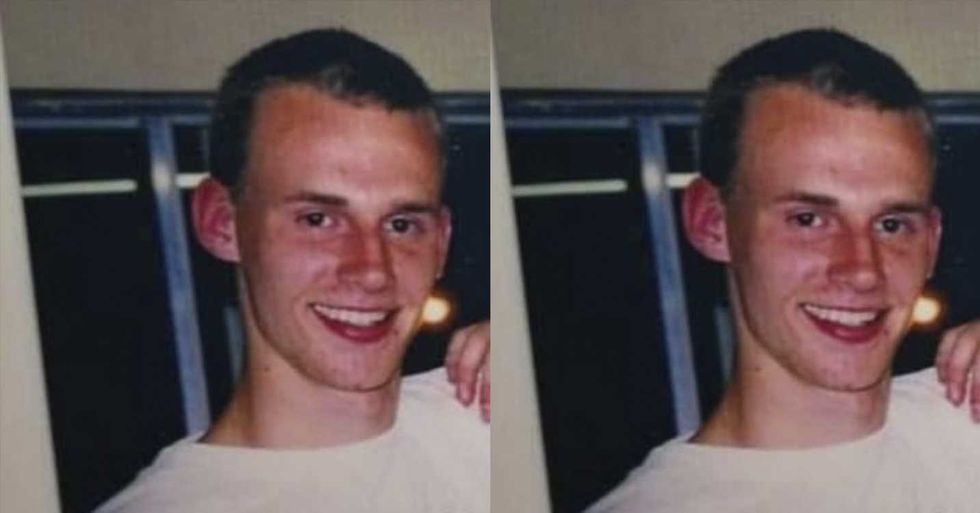 Facebook - pictured above is Andrew
His family hired a private investigator and an independent forensic pathologist to aid in the investigation. Both experts stated that Andrew had been murdered.
The investigation into Andrew's death lasted 13 months, and the police ultimately ruled that he had died by suicide.
The note and the knife found near the body only contained Andrew's fingerprints. Handwriting experts confirmed that he had written the note and didn't appear to be under duress.
There were also no signs of forced entry or struggle in his room. The room was locked, the windows were secured, and all the keys were accounted for.
More than two decades later, Andrew's family and friends still have questions. Recently, a true-crime podcast, Love & Justice, hosted by Emmy Award-winning producer Kyle Olson, has revisited the case.
Hopefully, renewed attention brought to the case will convince authorities to reopen it.
If true crime defines your free time, this is for you: join Chip Chick’s True Crime Tribe