VAKSMANV - stock.adobe.com - illustrative purposes only, not the actual person - pictured above is a woman in front of a waterfall

Human content, AI powered search.

Sign up for our true crime newsletter and get the cases, confessions and mysteries everyone is talking about.
On October 29, 2004, just before 9 a.m., a woman went up to the 21st floor of Wembley Point in London and bought a coffee from the café. Then, she opened a window and jumped out of it. To this day, she has never been identified.
Wembley Point is a 21-story tower containing offices. It is the tallest building in the area and is surrounded by a large parking lot. There isn't much nearby, except for a carpet shop, a couple of office buildings, and Stonebridge Park underground station.
The woman who jumped from the top of the tower was Black and was between 5'1" and 5'3." She was estimated to be between 20 and 40 years old.
She was wearing a thin black polo under a claret crew neck, a maroon bomber jacket, tights, black trousers, a pair of black Skechers shoes, a silver watch, and two silver rings. She was carrying a plastic bag and a large oil painting.
The woman entered the elevator and headed to the 21st floor. Two passengers noticed that she was in distress. One of them tried to offer her some reassuring words. They got out on another floor before her.
Meanwhile, the woman continued to the 21st floor, where there was a café. The café was not well-known to the public, as it was mostly frequented by those who worked in the building.
She bought a coffee and sat at a table near a window. Witnesses recall her walking through the building confidently, suggesting that she worked there.
Once she was seated, she smoked a cigarette from a nearly empty pack of Marlboros and leafed through a copy of the Guardian. Then, she stood up, climbed onto the table, opened the window and jumped out.
Just after 9 a.m., the police retrieved her body from the river below. She did not have a wallet, a phone, or anything on her person that would help to identify her.
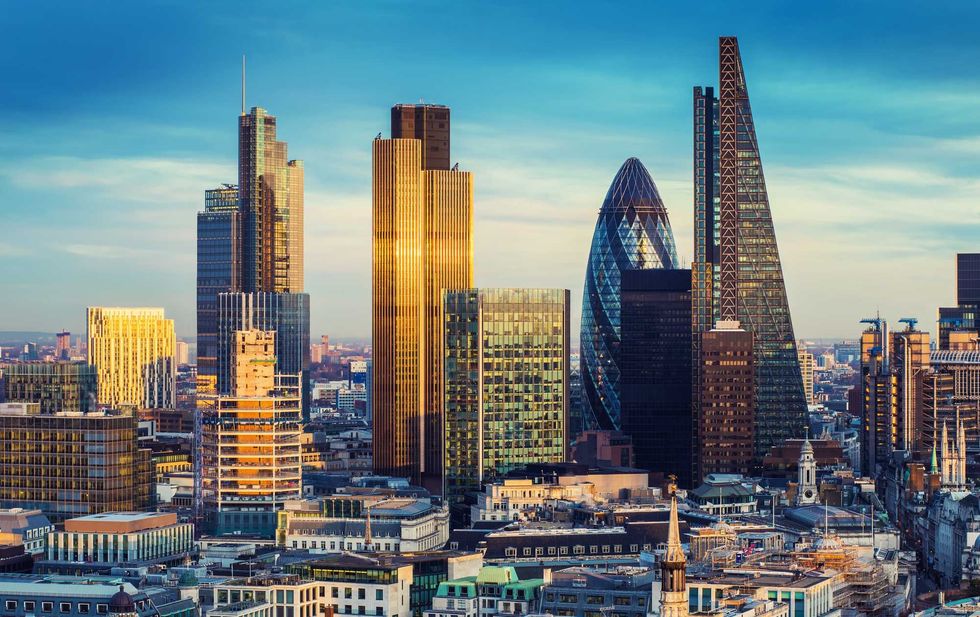 zgphotography - stock.adobe.com - illustrative purposes only - pictured above is the London skyline
She left behind the oil painting, a small amount of cash, the Guardian newspaper, the pack of cigarettes, a black plastic bag with the letters CPNY, and a seven-day bus pass in the café. It had been purchased three days before, on October 26, at 7:03 a.m.
The oil painting was an abstract piece that featured different figures and monochromatic patterns. On the right side of the canvas, bodies were dancing or falling. The center was a blank white space where a face should have been.
In the aftermath of her death, no one came forward to identify the woman's body or report her missing. Only one witness said that he had spoken to her a few weeks before her death and she had been really upset over her boyfriend's health. She may have had connections to the Chestnut Arts and Community Center.
The woman was buried in a common grave with no name. In recent years, a group of investigators began looking into the case more deeply.
The Wembley Point woman is just one of about 1,000 individuals in the United Kingdom who are still unidentified after their deaths. Hopefully, experts will eventually be able to solve this mystery.
If true crime defines your free time, this is for you: join Chip Chick’s True Crime Tribe