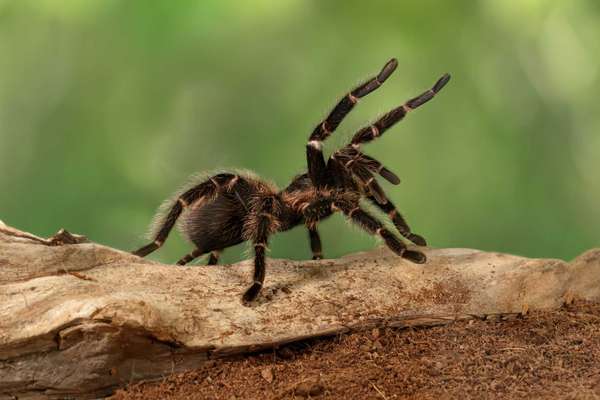
torook - stock.adobe.com - illustrative purposes only - pictured above is a spider

Human content, AI powered search.

Sign up for our lifestyle newsletter: relationships, romance and real stories, straight to your inbox.
Researchers at Griffith University have come up with a way to analyze remains recovered from underwater caves. Bones from extinct megafauna and other animals still contain evidence of how they lived, survived, and evolved over the years.
"By analyzing animal bones from two underwater cave systems in South Australia, we have revealed how different cave environments leave distinct preservation 'fingerprints' on skeletal remains," said Meg Walker, a PhD candidate under the Australian Research Center for Human Evolution Director Professor Julien Louys.
The team tracked how the skeletons changed over the decades they spent in underwater caves. Then, they compared the bones to those buried in dry caves.
"Using a range of methods, from the macro to the micro, we looked at features associated with wet and dry caves...things like spatial distributions of the bones and their surfaces, down to elemental compositions and proteins trapped in ancient cells," continued Walker.
The comparison showed that underwater caves can preserve bones very well. Many of the bones kept their original structure and fine surface details.
The water in submerged caves also left behind chemical and biological evidence. The type of evidence found on each bone was shaped by the amount of light in the water and the organisms living in the cave.
Several kinds of algae and aquatic plants grew in the water near cave entrances illuminated by sunlight. Sometimes, they even grew on the surfaces of bones. Deeper into the caves, where sunlight and plant life were absent, the bones there were intact and untouched.
On the other hand, remains preserved in dry caves did not have aquatic signatures and showed damage from land-based bacteria. Additionally, large plant roots caused long grooves to form across the bone surfaces.
The research team included divers from the Cave Divers Association of Australia. They collected remains from Green Waterhole and Gouldens Sinkhole, two underwater cave systems near Mount Gambier.
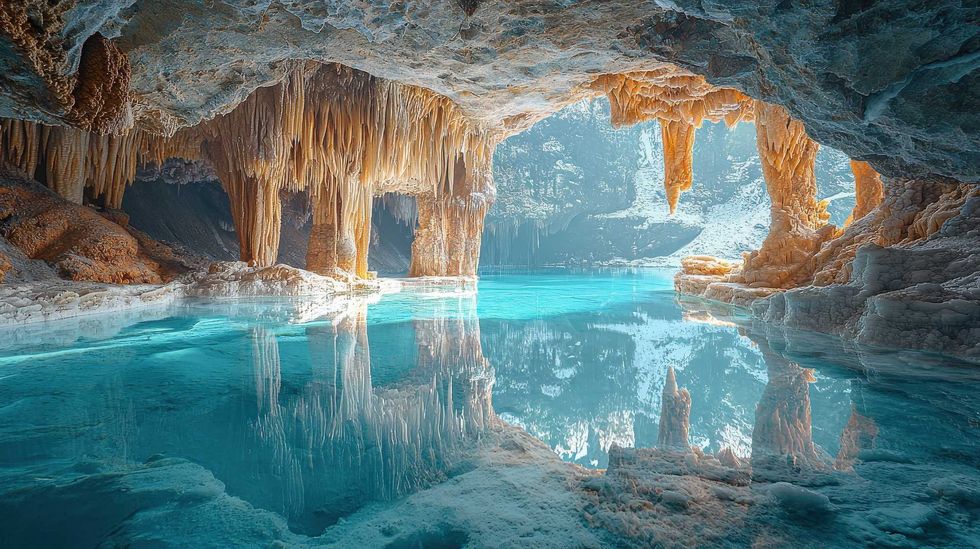 Patipon - stock.adobe.com - illustrative purposes only - pictured above is an underwater cave
Green Waterhole is a collapsed basin with underground tunnels that branch off a dry central mound, while the Gouldens Sinkhole is a shaft that drops about 200 feet below ground.
They are both located in a fenced-off pasture, and many animals have met their doom in these caves for over a century. In total, the divers recovered 231 animal bones from the caves.
The collection included both native and introduced species, such as cows, kangaroos, emus, dingoes, possums, rabbits, sheep, pigs, quolls and swamp rats. Some of the remains may date back to the 1840s, during the first European settlement of the area.
Analyzing these bones can help the researchers better understand how fossils from extinct megafauna entered the same underwater caves long ago.
"This study has delivered the first framework for interpreting how megafauna fossils formed, survived, and changed in underwater caves," said Walker.
"It will provide archaeologists and paleontologists worldwide with a powerful new tool for reconstructing past environments and histories in these challenging conditions."
The research was published in PLOS One.