torook - stock.adobe.com - illustrative purposes only - pictured above is a spider

Human content, AI powered search.

Sign up for our lifestyle newsletter: relationships, romance and real stories, straight to your inbox.
A boater on the West Coast of Canada noticed a mysterious island floating in British Columbia's Williston Lake in late July. The lake is one of the world's largest human-made reservoirs.
As for the strange island, it was massive and full of trees, birds, and other animals. The island was not on any maps, and the locals had never seen it before.
At first, a spokesperson for BC Hydro, the government-owned power utility that runs the reservoir, thought that the photos and videos of the floating island were created with generative artificial intelligence.
"In the days of AI, you really needed another form of verification or evidence, like a corroborating eyewitness...and soon, we got that," said Bob Gammer, the spokesperson for BC Hydro.
On July 21, a satellite image confirmed that the island was real. It is about 150 yards long and 75 yards wide. At the time, the water under the island was nearly 197 feet deep.
In mid-August, the island disappeared, but on August 31, it was discovered floating approximately 20 miles northwest from where it had originally been found.
According to Gammer, the island may have formed from a years-long buildup of logs and woody debris along the shoreline. Plants and trees grew from the decomposing material, resulting in a whole habitat.
Due to heavy summer rain and winter snowfall, the lake's water levels are the highest they've been in 14 years, which could explain why the large mass has moved away from shore. However, not everyone agrees with this explanation.
John Joseph Clague, a geologist and professor of earth sciences at Simon Fraser University in Canada, has seen evidence of erosion along the lake, but doesn't believe it could lead to an accumulation of forested material of this scale.
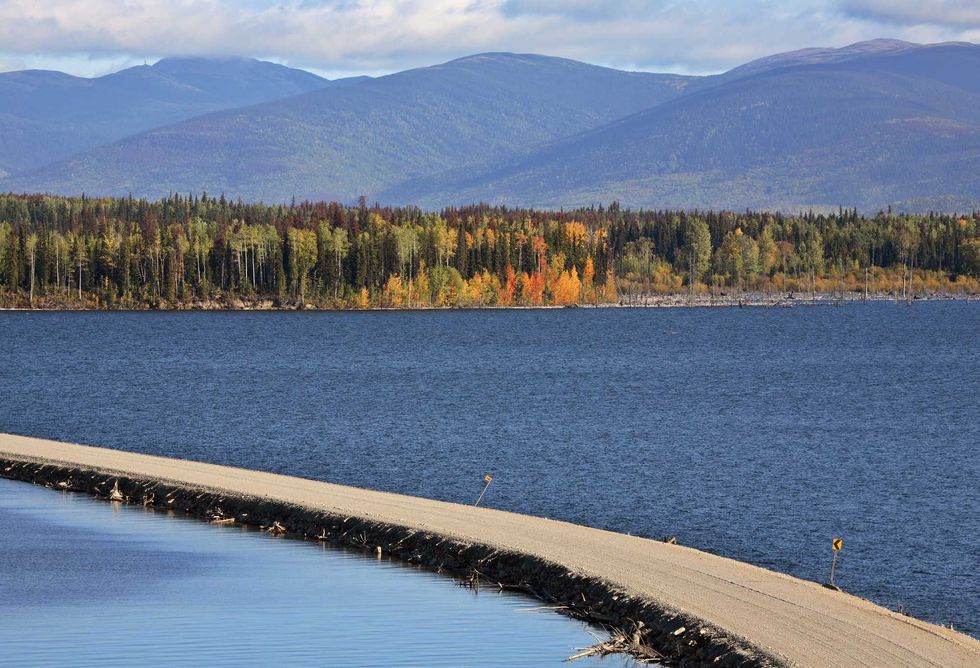 pictureguy32 - stock.adobe.com - illustrative purposes only, not the actual person - pictured above is Williston Lake
"There is erosion occurring, and trees do collapse into the lake, but they don't kind of form this very large mat of forested material," said Clague. "This is unusual. I've never heard of such a thing before."
It was also odd that the island hadn't broken apart after traveling such a distance. The waves in the reservoir can get rough during a windstorm, running the risk of tearing apart the mass.
Members of the Tsay Keh Dene First Nation were notified of the discovery. The island has stirred up public attention, but the idea of visiting it was squashed right away.
Boaters have been warned to stay away from the island because it is made up of an unstable, thin layer of logs and decaying debris. Climbing onto the island or landing a boat on it would be dangerous.
In recent years, similar floating islands have been observed elsewhere, including the Forty Acre Bog in Lake Chippewa in Wisconsin. They were more common sights in the past, when logging and damming weren't so widespread.
BC Hydro will continue monitoring the island's movements.
Sign up for Chip Chick's newsletter and get exclusive stories like this delivered to your inbox.