torook - stock.adobe.com - illustrative purposes only - pictured above is a spider

Human content, AI powered search.

Sign up for our lifestyle newsletter: relationships, romance and real stories, straight to your inbox.
New research presented at the fall meeting of the American Chemical Society (ACS) showcased a cookie made from plastic. Scientists have programmed yeasts to transform compounds from plastic and agricultural waste into edible proteins, vitamins, flavoring molecules, and other food ingredients.
The approach could provide a new way to reuse some of that waste, as plastic pollution is a major problem on our planet. Additionally, it could produce food in places where supplies are limited, such as disaster zones or deep-space missions involving humans.
A team of researchers from Southern Illinois University (SIU) Carbondale is addressing the problems of plastic pollution and food insecurity by experimenting with microorganisms to convert waste materials into edible food.
The work was conducted as part of a NASA-led project that aimed to produce food in deep space, where astronauts cannot fully rely on resources from Earth.
"We were trying to develop technologies for plastic upcycling to make more valuable products. We thought, why not focus on making food? Because plastic is carbon and food is carbon," said Lahiru Jayakody, associate professor.
One of the most common forms of plastic found in products like soda and water bottles is polyethylene terephthalate (PET). The material contains molecules rich in carbon that could be broken apart and rebuilt into something resembling proteins.
The research team used microbes to create molecules instead of performing the work themselves. They programmed a variety of yeasts to convert molecules derived from plastic and agricultural waste into proteins, vitamins, and flavoring compounds.
The researchers took PET plastic, discarded corn stalks and leaves, and other biomass with a technique called oxidative hydrothermal dissolution.
The process combines oxygen and water, which are then subjected to high temperature and pressure to break down tough materials into pieces that microbes can access.
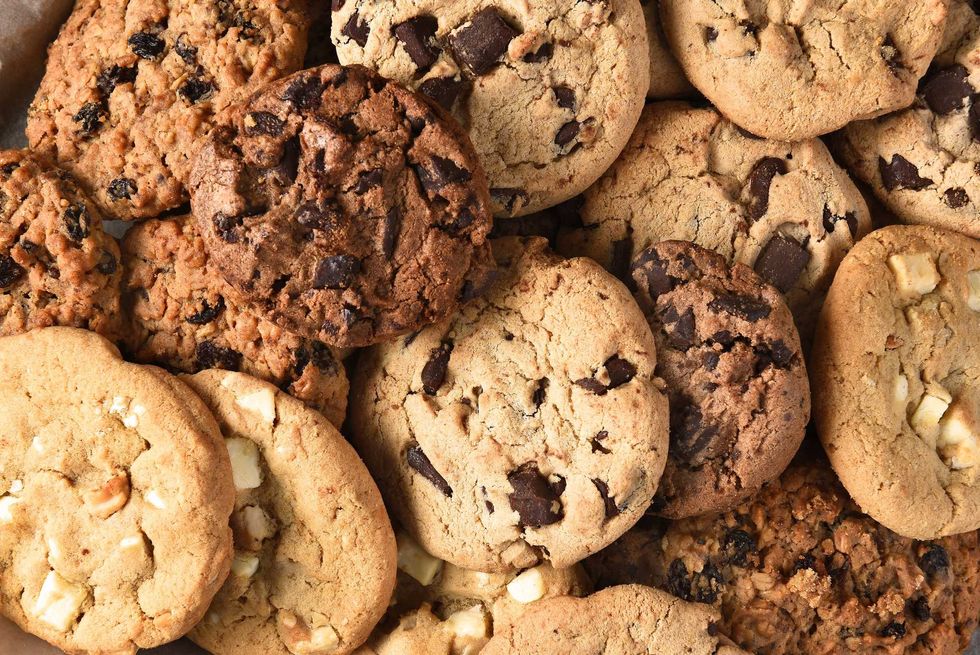 Steve Cukrov - stock.adobe.com - illustrative purposes only - pictured above are a bunch of different cookies
These smaller pieces are fed to the programmed yeasts, and the microorganisms are transformed into new food ingredients, including proteins, fats, and acids.
Finally, the ingredients are combined with starch, fiber, and sweetener. The mixture is pushed through a 3D printer to create cookies called µBites, which are pronounced as "microbites." The cookies are protein-rich.
Data shows that the cookies are safe to consume, but the researchers are still waiting for institutional approval before they conduct official taste tests.
So far, participants have assessed the cookies based on smell. Most of them stated that they would be willing to eat the cookies in situations where food is scarce.
The researchers are also trying to make the cookies more appealing to those with more food options. They are using microbes to further improve on the product.
They hope that µBites will be ready for public consumption within the next few years. It could be part of the solution to future global food demands.
The research was published by the American Chemical Society.